Xiaomi Pad 9 Pro Max gaming test: XRing O3 flies in Genshin, not PUBG Mobile
Notebookcheck's tests show Genshin Impact locked near 60 fps and PUBG Mobile stuck at 30. It is China-only, starts at CNY 4,799, and has no official SEA launch.
Stories on esportz.fun are written by the esportz.fun team under house pen names. About our authors
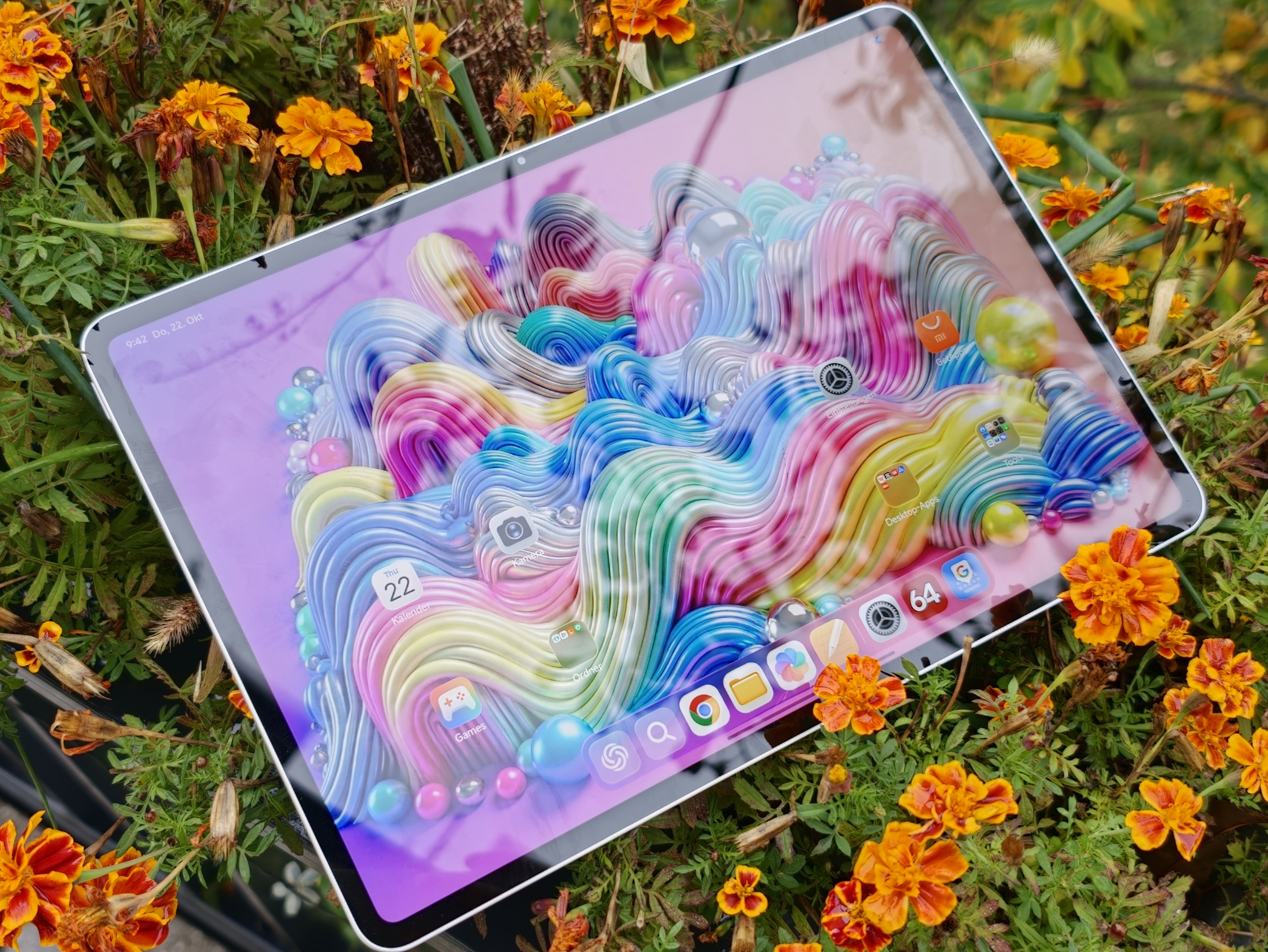
Xiaomi's Pad 9 Pro Max runs Genshin Impact at a near-locked 60 fps but PUBG Mobile at only about 30 fps, according to real-game tests Notebookcheck published on November 4, 2026. The 13.3-inch tablet is the first Xiaomi Pad with the company's own XRing O3 chip, and the results show that raw power only helps when a game is tuned for it.
The tablet is sold only in China, from CNY 4,799 (about $715 by GSMArena's conversion). Xiaomi has not announced a launch in Malaysia, Singapore or anywhere else outside China.
What's confirmed
The game results. Notebookcheck recorded frame rates with GameBench on a 16GB/512GB review unit:
- Genshin Impact: 59.9 fps on average, between 58 and 60, so it held its 60 fps cap almost the whole time. The same chip in the Xiaomi 18 Fold phone averaged 56.3 fps and dipped to 44, which Notebookcheck puts down to heat in the thinner phone.
- Dead Trigger 2: 115.1 fps on average, peaking at 120, so older games can use the high refresh rate.
- PUBG Mobile: 28.7 fps on average, at low or medium detail. The game currently stays at 30 fps on the XRing O3, and its UHD setting is not available on the chip at all.
The benchmarks. In GFXBench's 4K Aztec Ruins test the tablet scored 85 fps, against 50 fps for an iPad Pro with Apple's M5 and 57 fps for the Snapdragon 8 Elite Gen 5 in the OnePlus Pad 4. Sustained load is a weaker point: in 3DMark's Wild Life Extreme stress test it kept 64.8% of its peak, against 78.2% for the OnePlus Pad 4. Notebookcheck measured a drop of up to about 40% under long stress, while the back of the case peaked at only 42.3°C.
The hardware. Xiaomi's launch specs, as reported by GSMArena and Gadgets 360: a 13.3-inch 3,408 x 2,272 LCD at 144Hz with 1,000 nits, a 10-core XRing O3 built on a 3nm process at up to 4.35GHz, a 16-core Mali G2-Ultra GPU, 8GB to 16GB of RAM, 256GB to 1TB of UFS 4.1 storage, a 12,000mAh battery with 120W charging, eight speakers, Wi-Fi 7 and HyperOS 4 on Android 17. It weighs 645g and is 5.67mm thick. There is no 5G model.
Battery and screen. Notebookcheck's Wi-Fi browsing test ran for 24 hours 56 minutes, and it found no PWM flicker on the LCD. Its USB-C port also accepts a DisplayPort signal, so the tablet can act as a portable monitor for a laptop or handheld.
Prices in China. CNY 4,799 for 8GB/256GB, rising to CNY 6,599 for 16GB/512GB and CNY 7,899 for 16GB/1TB with the matte Soft Light screen. The keyboard costs CNY 1,099. Notebookcheck's import unit from Trading Shenzhen started at around $1,000. Notebookcheck scored the tablet 89%.
Background
Xiaomi's previous flagship, the Pad 8 Pro, used Qualcomm's Snapdragon 8 Elite. The Pad 9 Pro Max is Xiaomi betting on its own silicon, and its GPU now beats the M5 iPad Pro in this benchmark. But mobile gaming has a long history of raw specs losing to software. Since Sony's PSP arrived in 2004 and through the early smartphone years, games often ran best on the device the developer had targeted, not on the most powerful one, and PUBG Mobile's 30 fps cap here is the same story. Popular games keep lists of supported chips, and a brand-new chip is not always on them.
My take: what it means for players
I care more about sustained performance than peak scores, and this tablet is a mixed result on that front. Genshin holding 60 fps without throttling is great, and the near 25-hour battery result is outstanding for a 13-inch screen. But a 35% sustained-performance drop in stress tests and a hard 30 fps cap in PUBG Mobile tell me that competitive mobile players should wait for game updates before buying.
For players in Southeast Asia, the bigger issue is that it is not officially sold here. An import at around $1,000 means no local warranty, and Notebookcheck notes there is no satellite positioning. If you mainly play MLBB or PUBG Mobile, a phone or tablet with a Snapdragon chip that those games already support is the safer buy today. If you want a large screen for Genshin and want to use it as a second monitor for a handheld, the Pad 9 Pro Max is very tempting, if you are happy to import.
What we don't know yet
- SEA launch. Xiaomi has not said whether the Pad 9 Pro Max will be sold outside China.
- PUBG Mobile support. Neither Krafton nor Xiaomi has said when the XRing O3 will get higher frame rate options or the UHD setting.
- Update policy. Notebookcheck says Xiaomi has not officially stated how long the Chinese model gets updates.
- Local prices. There is no official ringgit, Singapore dollar or peso price.
Quick facts
| Key | Value |
|---|---|
| Chip | Xiaomi XRing O3 (3nm, 10 cores, up to 4.35GHz) |
| Screen | 13.3-inch 3.4K LCD, 144Hz |
| Genshin Impact | 59.9 fps average (Notebookcheck) |
| PUBG Mobile | 28.7 fps average, capped at 30 fps |
| Battery | 12,000mAh, 120W; 24h 56min Wi-Fi test |
| China price | From CNY 4,799 |
| Availability | China only |
FAQ
Can the Xiaomi Pad 9 Pro Max run PUBG Mobile at 60 fps?
Not yet. In Notebookcheck's November 2026 test, PUBG Mobile was limited to about 30 fps on the XRing O3 at low and medium detail.
How does it run Genshin Impact?
Very well. Notebookcheck measured an average of 59.9 fps, staying between 58 and 60 fps without heat throttling.
Is the Xiaomi Pad 9 Pro Max sold in Malaysia?
Not officially. Xiaomi has only launched it in China, so buyers in Malaysia would have to import it without a local warranty.
How much does the Xiaomi Pad 9 Pro Max cost?
In China it starts at CNY 4,799 for 8GB/256GB. Imported units start at around $1,000 according to Notebookcheck.
More: a Japanese-built gaming laptop with a 240Hz screen.
Sources: Xiaomi (official product page); Notebookcheck (gaming test and review); GSMArena; Gadgets 360.