NEC launches Japan-made Lavie S13 and N13 laptops with new Intel chips
The 1,088 g Lavie S13 starts at ¥299,860 with a Core Ultra 5 322 and the N13 at ¥279,840. NEC sells its Lavie laptops only inside Japan, so import is the route.
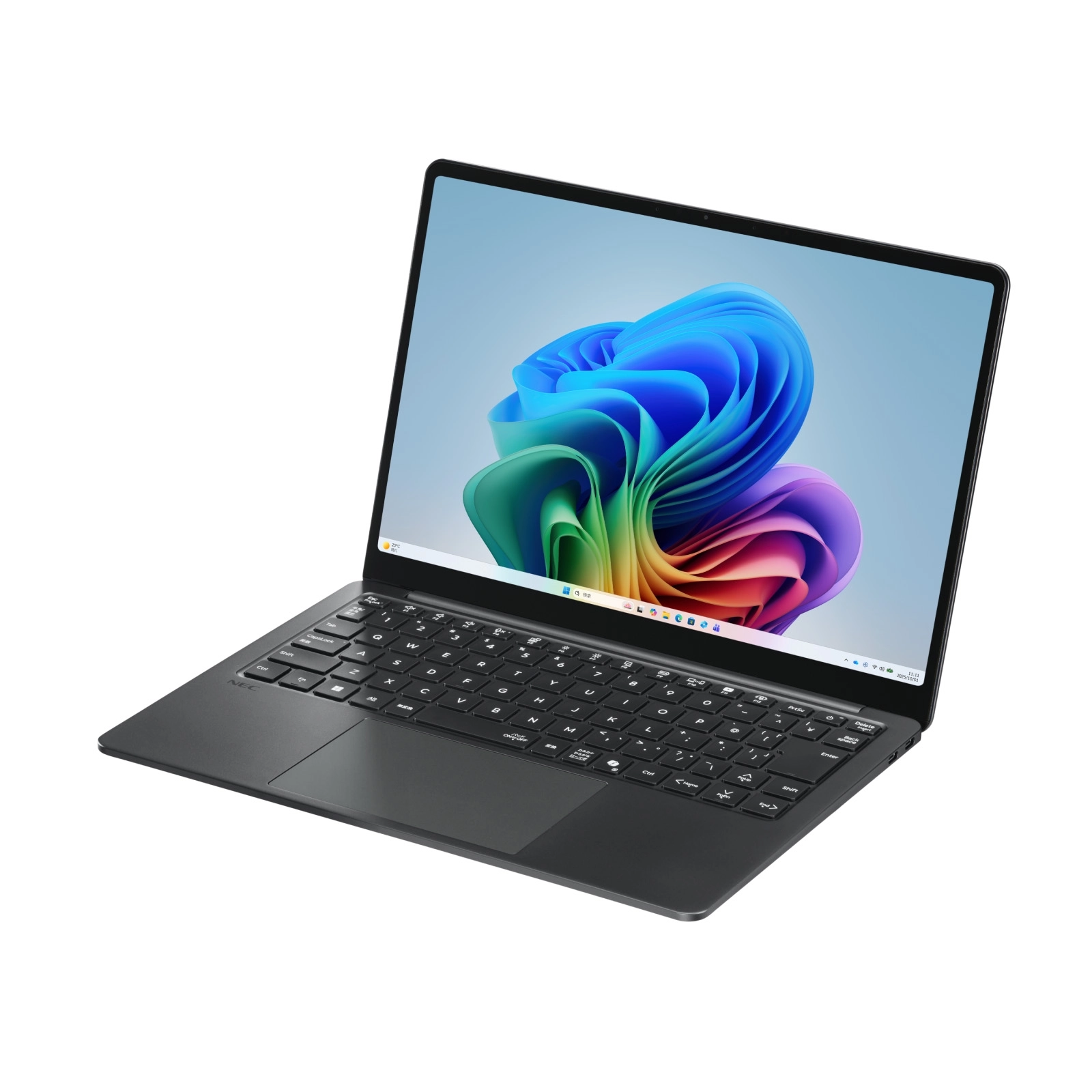
NEC has added two 13-inch laptops to its Lavie range in Japan: the Lavie S13 with Intel Panther Lake processors and the cheaper Lavie N13 with Wildcat Lake chips, both offering up to 32 GB of LPDDR5X memory. Notebookcheck reported the launch on October 31, 2026; the N13 starts at ¥279,840 and the S13 at ¥299,860.
Lavie S13: the light one
The S13 is the premium model. It weighs 1,088 g and measures 12.9 mm thick, and it offers either a six-core Core Ultra 5 322 or an eight-core Core Ultra 7 355. Notebookcheck's benchmark data puts the Core Ultra 7 about 47% ahead of the Core Ultra 5 322 in Cinebench 2024. The NPU is rated at 46 or 49 TOPS depending on the chip.
Other specs: a 76.1 Wh battery, up to 1 TB of PCIe storage, a 1920 x 1200 IPS display, and two 2 W speakers. Connectivity is limited to three USB 3.2 Gen 2 Type-C ports, so expect to carry a dongle. It comes in three colours.
Lavie N13: Wildcat Lake on a budget
The N13 uses Wildcat Lake, Intel's cost-optimised 18A chip. The top option is the Core 7 350, a six-core, six-thread part with two performance and four efficiency cores in a 15 W envelope. Notebookcheck rates it only a few percent quicker than AMD's entry-level Ryzen AI 5 430, while the S13's Core Ultra 7 355 beats it by about 43%. A Core 5 320 model sits below it at roughly 25% slower again.
The N13 weighs about 1,177 g, measures 15 mm thick, carries a 54 Wh battery and uses a 13.3-inch 1920 x 1200 IPS screen with optional touch.
Where these fit for gamers
Neither machine is built for gaming: both rely on integrated graphics and target office work, browsing and light photo editing. The interest is in the silicon. Wildcat Lake is the chip Intel says is sold out after unit sales rose about 70% in a quarter, and NEC's N13 shows how PC makers are using it to build cheaper machines while memory costs climb. The base N13, with a Core 5 320, 16 GB of RAM and a 256 GB SSD, costs ¥279,840, roughly $1,774 by Notebookcheck's conversion.
Availability
NEC does not sell Lavie-branded products outside Japan, and nothing suggests these two will be different. Buyers in Southeast Asia would need to import one, with Japanese keyboard layouts and domestic warranty terms to consider. The pair launched alongside the larger Lavie X14.
Source: Notebookcheck; NEC Lavie.