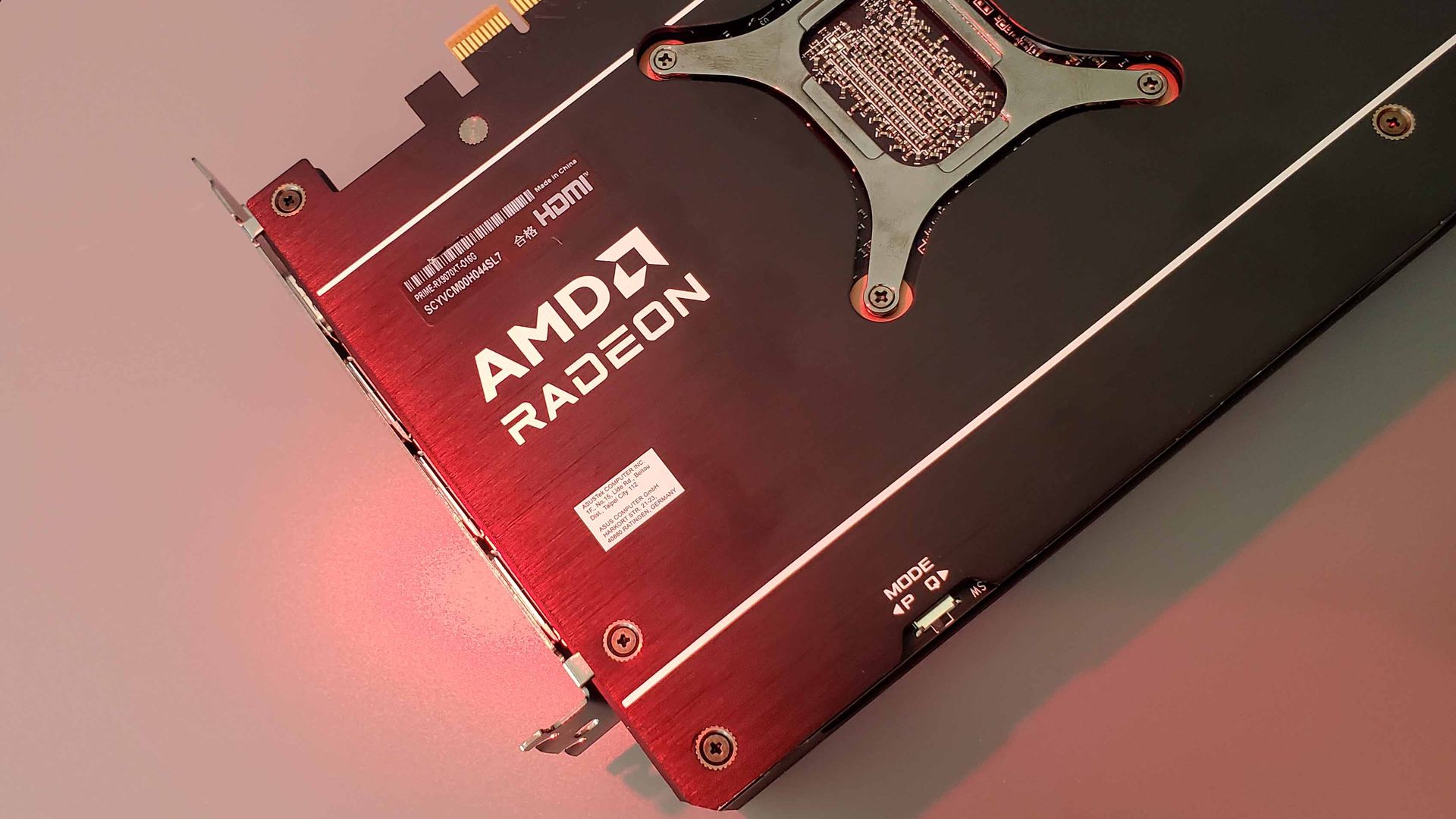
AMD fixes the Radeon driver bug that kept SSDs writing in optional Adrenalin 26.11.1
The optional driver out November 12 fixes idle drive writes on RX 7000 cards and newer. It will not install itself, and RX 6000 coverage is still unclear.
Stories on esportz.fun are written by the esportz.fun team under house pen names. About our authors
Updated November 14, 2026: AMD released the fix on November 12 in Adrenalin 26.11.1, an optional driver. The bug made a background process write to the system drive nonstop, even when the PC was idle. It resurfaced on November 8 and 9 after posts on Reddit and X, and AMD had confirmed it was working on a fix.
Because it is an optional driver, it will not necessarily arrive on its own. Download 26.11.1 from AMD's site, then use Resource Monitor's Disk tab to confirm that atieclxx.exe has gone quiet at idle.
What's confirmed
The fix. AMD's release notes for Adrenalin 26.11.1, last updated November 12, list two fixed issues: excessive writes to the system drive at idle on Radeon RX 7000 series cards and newer, and excessive writes while moving or resizing application windows. PC Gamer points out that the wording names only RX 7000 and newer, while some user reports came from RX 6000 owners, so it is not clear whether older cards needed or got the same fix. The driver package itself still lists support back to the RX 5000 series. The notes also carry nine known issues, including crashes in Assassin's Creed Black Flag Resynced and hair corruption in Phantom Blade Zero on RX 9000 cards.
The process. The writes come from atieclxx.exe, the AMD External Events Client Module. VideoCardz explains that it belongs to the AMD External Events Utility service, which handles display jobs such as monitor detection and Radeon Software hotkeys.
How much it writes. VideoCardz and Hardware Busters both report user measurements of 0.3MB/s to 1.5MB/s, with one Reddit user seeing about 5MB/s. On November 9, Tomasz Gawroński posted on X that the process had written 19.5GB in 12 hours on his PC, about 0.65MB/s, or 56GB a day if it never stops. PC Gamer reports that he traces the problem back to Adrenalin 26.7.1, released in June.
What that adds up to. At 5MB/s nonstop, VideoCardz calculates about 432GB of writes a day and nearly 13TB a month. Hardware Busters compares that with a mainstream 1TB TLC SSD rated for 600TB written: the low rates would use about 3% of that rating a year, while the worst case would use roughly a quarter of it a year. Both outlets stress that these are writes counted by Windows, not measured wear on the flash chips, and that no controlled test has been published.
The SSD-health claim. A Reddit user said the process had cost about 1% of their drive's reported health every month for 16 months. Hardware Busters notes that this has not been independently verified, so treat it as one person's report.
AMD's response. According to Hardware Busters, AMD forum representative AMD_Matt wrote on October 21 that the company was "looking into it with the aim to resolve it in a future driver release". A second representative, AMD_Vik, later linked the problem to an interaction between the External Events Utility and Microsoft's PCIe filter driver, said a fix had been submitted and pointed to Adrenalin 26.11.1.
Not fixed in 26.10.2. AMD's release notes for the previous driver, Adrenalin 26.10.2 (October 30), did not mention the SSD writes at all.
Not every PC is affected. PC Gamer says its own AMD GPU tester could not reproduce the problem, and VideoCardz notes that some users on 26.10.2 see no unusual activity.
Old workarounds. Before the fix, users relied on two stopgaps, and neither worked for everyone. Disabling the AMD External Events Utility service in Windows Services can break Adrenalin hotkeys and some display features. Turning off Resizable BAR in the BIOS can cost gaming performance.
Background
Writes like these matter more now because storage is no longer cheap. PC Gamer points to high SSD prices, and PC builders are already trimming RAM and storage to cope with the memory shortage. Every SSD has an endurance rating in terabytes written, and budget QLC drives have the smallest ones. Hardware Busters says a 500GB QLC drive rated for 200TB could pass its rating in under two years at the worst rate reported. Club386 adds that it is not yet clear whether PCs that only use the Radeon graphics built into Ryzen processors are affected, since they run the same driver package.
My take: what it means for players
I would not panic, but I would check. For most people on a decent 1TB TLC drive, the low write rates are a rounding error over the life of the SSD. The real risk is the cheap 500GB QLC boot drive in a budget build, which is exactly the kind of PC people are buying while memory and storage prices stay high.
It is also the second time since 2025 that AMD software has been caught writing to drives for no good reason. Hardware Busters recalls a similar complaint last year about AMD's chipset drivers rewriting a log file. Background services should be quiet, and a driver utility that only exists to spot monitors and hotkeys has no business writing gigabytes a day.
My advice now that the fix is out: if you had disabled the External Events Utility service or Resizable BAR, install 26.11.1, turn them back on and check Resource Monitor once. I do think AMD should have pushed this as a recommended driver rather than an optional one, given how many people were worried about their drives. If you never saw the writes, you can wait for the next full release. In Malaysia and the rest of Southeast Asia, where a replacement SSD costs more than it did a year ago, a minute of checking is cheap insurance. We have not checked local ringgit SSD prices for this story.
What we don't know yet
- Older cards. AMD's fix note names RX 7000 and newer; it has not said whether RX 6000 owners were affected.
- Next full driver. AMD has not said when the fix reaches a recommended (non-optional) release.
- Real wear. Nobody has published a controlled test of how much flash wear these writes cause.
- Which systems. AMD has not explained why some PCs are affected and others are not.
- Handhelds and laptops. AMD's release notes say Adrenalin does not support handheld gaming PCs, which use their makers' drivers. Whether those drivers contain the same bug is unconfirmed.
Quick facts
| Key | Value |
|---|---|
| Process | atieclxx.exe (AMD External Events Client Module) |
| Reported write rates | 0.3 to 1.5MB/s, one report of about 5MB/s |
| Worst-case total | About 432GB a day, nearly 13TB a month at 5MB/s |
| Fixed in | Adrenalin 26.11.1 optional driver, November 12, 2026 |
| Fix applies to | Radeon RX 7000 series and newer (per AMD notes) |
| Not fixed in | Adrenalin 26.10.2 (October 30, 2026) |
FAQ
How do I know if my SSD is affected?
Press Win + R, type resmon, open the Disk tab and sort by writes. If atieclxx.exe writes steadily while your PC is idle, you are affected.
Is it safe to disable the AMD External Events Utility?
It stops the writes on many systems, but users report it can break Adrenalin hotkeys and some display functions until you turn it back on.
Has AMD fixed the SSD write bug?
Yes. Adrenalin 26.11.1, an optional driver released on November 12, 2026, lists the idle drive writes as fixed for RX 7000 series cards and newer.
Will this kill my SSD?
Unlikely on a typical 1TB TLC drive at the low rates. At the highest reported rate, a small QLC drive could reach its rated endurance in under two years.
More: CPU-Z data shows 64GB PCs down 18% as RAM prices push buyers to 16GB.
Sources: AMD (Adrenalin 26.11.1 and 26.10.2 release notes); PC Gamer; TechPowerUp; VideoCardz; Hardware Busters; Club386.