
WITS Starter Guide — What Is This Sorcery: Quick Prep
Quick WITS primer: deck rules, mana, Heroes, Catenians, relics, traps, key keywords, and simple early-game plans so you stop throwing away obvious wins.
TL;DR
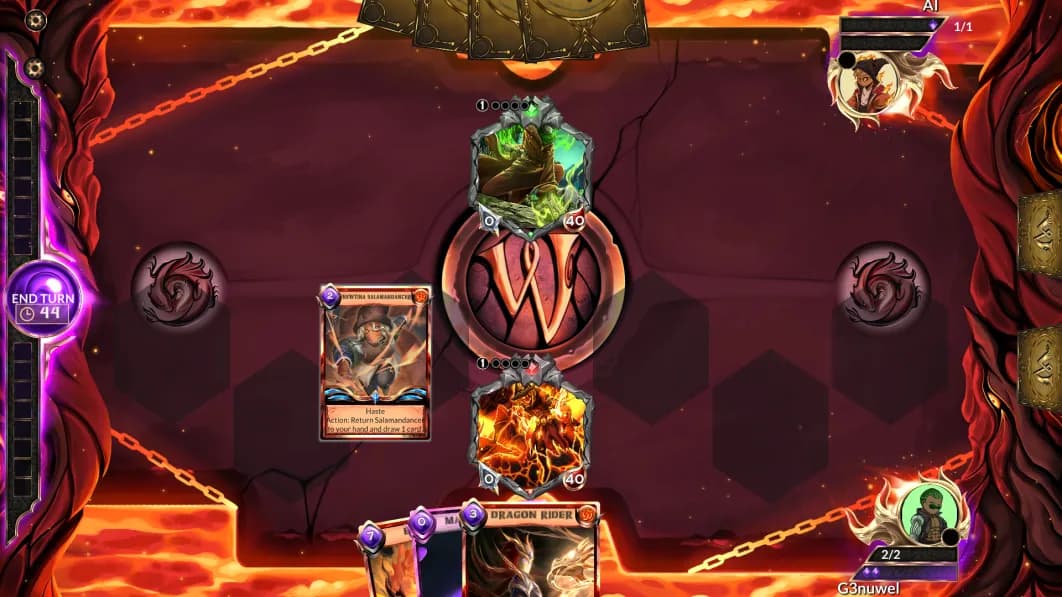
- WITS uses a 40-card faction deck led by a Hero (starts 0 Attack, 40 HP; Heroes don't count toward 40).
- Start with 2 mana, +1 each turn; unused mana doesn't carry over. Battlefield: 7 slots, one is Hero so six for Catenians.
- Relics boost Heroes/Catenians, Sorcery swings boards, Traps trigger later—timing beats flash.
- Learn Protection, On Play, Divine Shield, On Death, Flying, Fury for smarter trades.
What You Need to Know First
Before you queue a match, sort the basics. WITS is less about random RNG miracles and more about timing, placement, and choosing which of your Catenians eats a removal spell so your combo survives. Here's the hard data you'll want in front of you.
| Item | Effect | Where to Get |
|---|---|---|
| Deck size | 40 cards, faction-based | Build screen |
| Hero | Starts with 0 Attack and 40 HP; levels up by playing faction cards to unlock abilities at Level 2 and 3 | Hero select |
| Mana | Start with 2, gain +1 per turn; unused mana does NOT carry over | Turn system |
| Battlefield slots | 7 total slots; one is occupied by your Hero, so 6 are available for Catenians | Match UI |
| Catenians | Summonable units with stats and keywords (On Play, On Death, Protection, etc.) | Card pool |
| Relics | Equip to Heroes or Catenians for stats/effects | Card pool |
| Sorcery (Spells) | One-use effects: damage, draw, mana, buffs | Card pool |
| Traps | Hidden, delayed-trigger cards that activate on conditions | Card pool |
A few quick notes: Heroes don’t count toward the 40-card limit and are active on the board, so their positioning and relics matter more than you'd expect. The game rewards planning a couple turns ahead — yes, even against aggro.
Step-by-Step Guide
-
Pick a Hero and faction that match how you like to play.
- If you want fast wins, aim for aggro-friendly Heroes. If you prefer mid-to-late scaling, choose a Hero with strong level-up payoffs.
-
Build a tight 40-card deck.
- Prioritize curve and synergy: cheap Catenians for early presence, a few reliable removal Sorcery cards, and 3–5 Relics or Traps depending on your plan.
-
Learn the board math: mana, slots, and tempo.
- You start at 2 mana and gain +1 each turn; bank nothing. That means each turn is a forced decision: develop board or hold answer.
-
Play for level spikes.
- Heroes level by playing faction cards. If your Hero’s Level 2 or 3 unlock is a game-changer, plan a turn or two to hit that reliably rather than spamming inefficient plays.
-
Use placement and Protection smartly.
- Protection forces opponents to target that unit first. If your unit has Protection and On Death synergy, it might be the perfect sacrificial lamb.
-
Don’t spam Sorcery just because it looks flashier.
- Sorcery (Spells) can swing games, but wasting them on small gains will cost you. Save them for board clears, direct damage to finish a Hero, or turning a losing trade into a winning one.
-
Trap timing is everything.
- Traps are hidden threats. Place them where opponents overextend: on-battlefield triggers or expected spell windows.
-
Finish when you can.
- If you have a lethal line in two clear steps, take it. WITS rewards converting a lead rather than stretching it out.
Useful quick-reference table: key card types and when to prioritize them.
| Item | Effect | Where to Get |
|---|---|---|
| Hero | Active board fighter + passive that levels (Level 2 and 3 matter) | Hero select |
| Catenians | Board units: On Play, On Death, Protection, Flying, Fury | Card pool |
| Relics | Equip for attack/defense/utility; can let Heroes attack | Card pool |
| Sorcery (Spells) | One-shot effects: damage, draw, mana, buffs | Card pool |
| Traps | Hidden conditional effects that trigger later | Card pool |
How a typical early turn plays out:
- Turn 1–2: Establish board with low-cost Catenians or set up a small Trap. Keep one Sorcery if you expect early removal.
- Turn 3–5: Start forcing trades. Place Relics on Heroes only when they change combat math or protect a level-up.
- Turn 6+: Push for level 2/3 Hero triggers, combo with Sorcery and On Death synergies to close the game.
If you remember one thing: timing > flashy moments. A well-timed Trap or saved Sorcery can ruin someone who assumes they have the board.
Pro Tips
- Count the enemy mana curve each turn. If they spent two cards on turn 3, they usually can’t answer a big turn 4—you can plan a relic or Sorcery accordingly.
- Use a low-cost Catenian with Protection to bait removal and preserve your key On Death unit. Think of it as sacrificial chess, not mindless trading.
- If your Hero’s Level 3 is a win condition, prioritize playing faction cards in small piles rather than one big overcommit—you’ll hit the spike more reliably.
- Trap placement: put them where the opponent wants to overextend (lanes with tempo advantage). A single trigger can flip a whole turn.
- Don’t slap Relics on Heroes unless they change damage math. A relic that lets a Hero attack is great only if it actually secures a trade or lethal.
Common Mistakes to Avoid
- Overvaluing early wins: playing too many one-drop Catenians without synergy leaves you toast against midrange or control.
- Wasting Sorcery on marginal value: those spells are for swing turns, not polishing a lead.
- Ignoring positioning: with Protection and Flying on the table, lane placement decides trades more than raw stats.
- Treating Traps like extra Sorcery: traps are about timing and psychology, not immediate board tempo.