Ghost of Yotei Difficulty Guide — Casual to Lethal
Ghost of Yotei difficulty guide for View All — Casual to Lethal explained: damage, parry timing, enemy aggression, stealth changes, and custom-mode tips.
TL;DR
- Casual→Lethal changes damage taken, parry/dodge windows, simultaneous enemies, stealth sensitivity, and Spirit recovery speed.
- Casual/Easy are for story and practice; Medium is the intended balance; Hard/Lethal demand perfect timing and planning.
- Custom Mode lets you mix settings (e.g., Lethal damage with Easy timing) so you can craft a specific challenge.
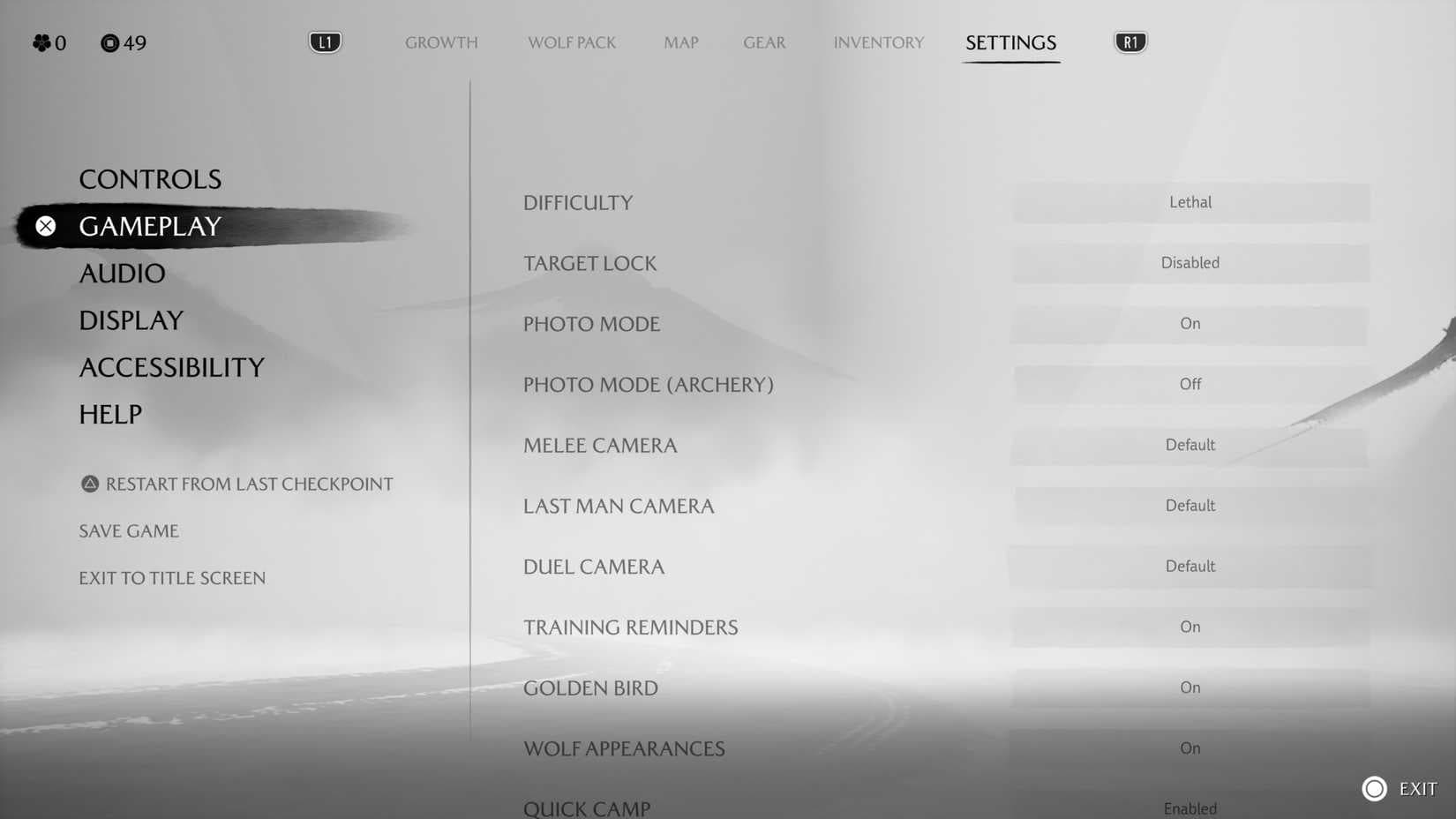
- You can swap difficulty anytime outside combat via Settings > Gameplay > Difficulty — use Medium to learn before cranking it up.
What You Need to Know First
| Item | Effect | Where to Get |
|---|---|---|
| Recommended Starting Difficulty | Medium for first full run (learn systems) | N/A — your pick at start |
| Settings Access | Change difficulty outside combat | Settings > Gameplay > Difficulty |
| Wolf Companion | Distraction, positioning, opens tactical windows | Unlocked in early story beats (auto) |
| Essential Options | Parry visual/audio aids, Accessibility toggles | Settings > Accessibility |
| Custom Mode Options | Timing Windows, Enemy Aggression, Enemy Damage, Stealth Sensitivity, Hero Bonus Perks | Settings > Gameplay > Custom Difficulty |
A few fundamentals before you jump in, spoken like the grizzled friend who’s done the runs so you don’t have to. Difficulty in Ghost of Yotei doesn’t just slap more HP on enemies — it alters core mechanics:
- Damage scaling: How much punishment you and enemies do. Lethal often reads like one-hit duels. Casual barely nudges you.
- Parry/Dodge timing windows: How tight the frames are for successful parries and rolling i-frames.
- Enemy aggression: How many foes attack you at once and how coordinated they feel.
- Stealth sensitivity: Detection ranges, alert durations, and how fast guards respond.
- Spirit recovery: How quickly you regain resolve and Spirit-based perks.
You’re not locked into a choice. Switch outside combat via Settings > Gameplay > Difficulty. If you want to treat the first run like a cinematic hobby, pick Casual. If you like that punch-in-the-face training montage (think: Sekiro with less Kyoto), start on Medium and learn the rhythms.
Step-by-Step Guide
-
Pick your baseline
- If you want the story with minimal fuss, pick Casual or Easy. If you want to learn the systems at the intended pace, choose Medium. Hard and Lethal are for players who want every encounter to feel like a duel.
-
Review the difficulty breakdown (quick reference)
| Mode | Damage Taken | Parry/Dodge Window | Simultaneous Enemies | Stealth Difficulty |
|---|---|---|---|---|
| Casual | Minimal | Extremely Forgiving | 1 Enemy | Very Easy |
| Easy | Easy | Wide Window | 1 Enemy | Low |
| Medium | Normal | Standard Timing | 1-2 Enemies | Normal |
| Hard | Punishing | Tight Window | 1-3 Enemies | High |
| Lethal | Lethal (One-Hit Death) | Perfect Timing | 2-3 Enemies | Most Punishing |
-
Learn the mechanical pillars first
- Practice perfect parries, dodging for i-frames, and Spirit management on Medium. The AI patterns don't change; the timing and consequences do. That means everything you learn scales up — which is nice, because you can practice the same moves without relearning enemy animations.
-
Use Custom Mode to isolate a weakness
- Want Lethal-level damage but more forgiving parry windows? Go Custom and toggle Enemy Damage up while widening Timing Windows. Useful for one-off challenge runs or training for Hard/Lethal without getting stomped.
| Item | Effect | Where to Get |
|---|---|---|
| Timing Windows | Adjust parry/dodge frame precision | Settings > Gameplay > Custom Difficulty |
| Enemy Aggression | Control how many foes attack simultaneously | Settings > Gameplay > Custom Difficulty |
| Enemy Damage | Scale incoming damage separately | Settings > Gameplay > Custom Difficulty |
| Stealth Sensitivity | Adjust detection mechanics | Settings > Gameplay > Custom Difficulty |
| Hero Bonus Perks | Modify Spirit recovery and starter perks | Settings > Gameplay > Custom Difficulty |
-
Practice specific encounters
- If a fight gives you grief, lower Difficulty outside combat, practice the openings and parry timing, then bump it back up and re-run it. Because AI behavior stays the same, practice transfers.
-
Prepare for Hard and Lethal runs
- Master: perfect parry timing on multiple enemy types, i-frame dodges, and Spirit recovery management.
- Use your Wolf Companion as bait and flanker — on higher difficulties the wolf’s distractions let you break coordinated assaults.
-
Quality-of-life and accessibility
- Visual attack indicators, audio timing cues, and simplified inputs live in Settings > Accessibility. They don’t change difficulty directly but can make learning mechanics far less frustrating.
-
Final checklist before going Hard/Lethal
- Know enemy parry windows, have a route planned for stealth segments, and be comfortable with Spirit recovery timings. Lethal is effectively one-hit death territory; treat it like a speed chess match, not a brawl.
Pro Tips
- Use Medium to prototype strategies: because AI behavior is stable, practicing an encounter on Medium will teach you the exact timings you need on Hard or Lethal — you just have less margin for error later.
- When building a Lethal run in Custom Mode, separate Enemy Damage from Timing Windows. Cranking up damage but keeping wider parry windows lets you train lethal health values without suiciding on bad inputs.
- Treat your Wolf Companion as a cooldown timer: use it to reset engagement windows and force a staggered attack pattern. On Hard+ it’s more than flavor — it’s a reliable tool to split grouped enemies.
- Enable the parry audio cue in Accessibility while you learn. It’s not cheating — it’s using the systems the devs gave you. After a dozen fights, try turning it off to test raw muscle memory.
- For stealth-heavy runs, reduce Stealth Sensitivity in Custom Mode to learn patrols. Then put it back to Normal or High to see how small mistakes escalate into multi-enemy engagements.
Common Mistakes to Avoid
- Assuming AI patterns change: they don’t. You’ll always face the same animations; difficulty alters timing and consequences, so practice still counts.
- Ramping up to Hard/Lethal too early: people often choose Lethal thinking more challenge = more fun, then get blocked by one-hit deaths. Learn Medium first.
- Ignoring the Wolf Companion: on higher difficulties players treat it like a cosmetic and miss easy openings or stuns it reliably creates.
- Overlooking Accessibility options: visual/audio parry cues and input simplifications are there to help you learn the rhythm. Turning them off too soon makes training needlessly brutal.